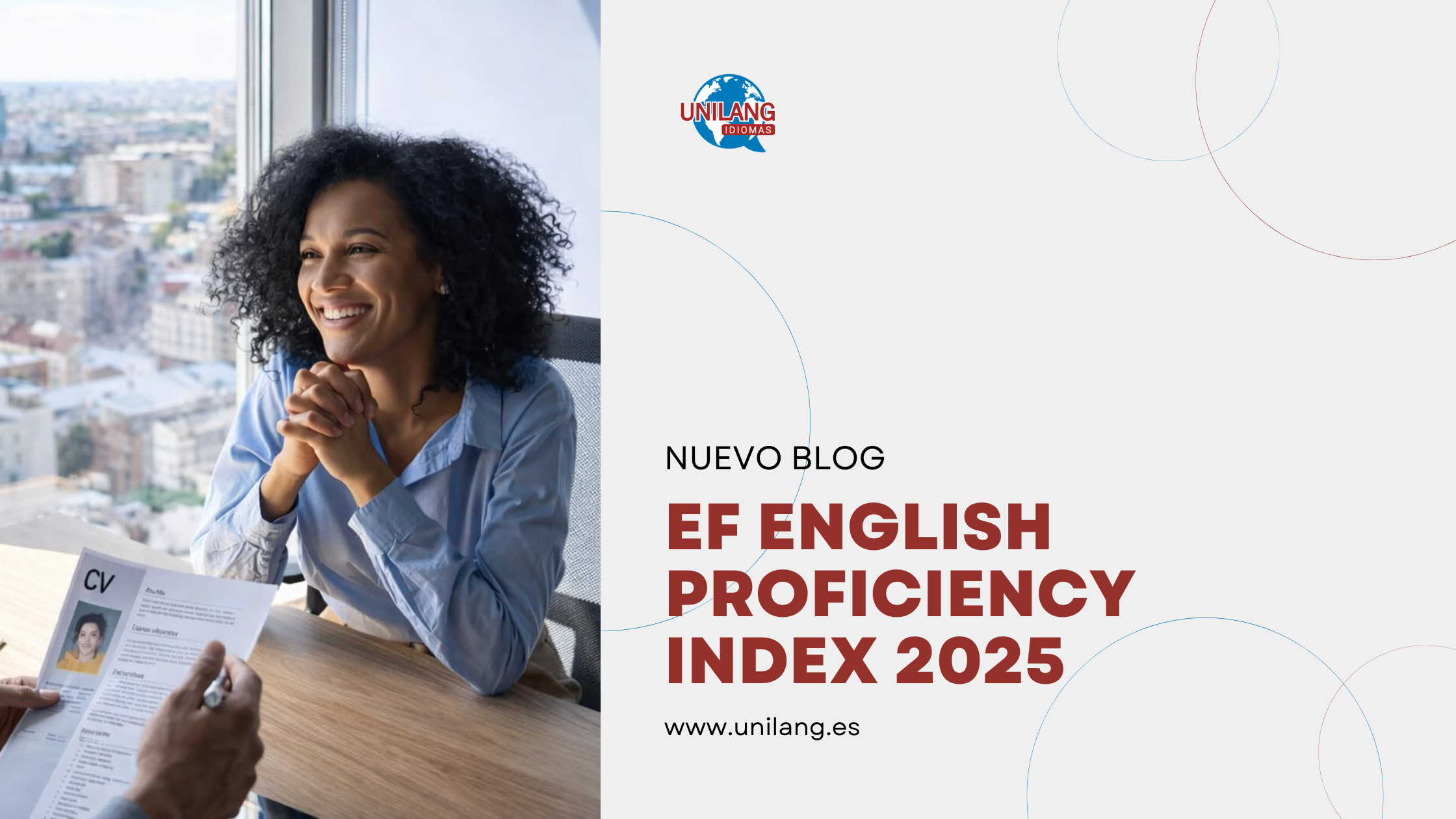
This January, Madrid witnessed the national presentation of the EF English Proficiency Index 2025, the most comprehensive international report on English proficiency in adults, based on more than 2.2 million tests conducted in 123 countries and regions. The document, which has been measuring language skills beyond traditional exams for years, once again highlights a paradox affecting Spain: despite decades of studying English, its actual use as a professional tool remains limited, with direct consequences for the employability of Spanish workers.
During the event, experts and EF officials emphasised a key idea: English ‘is no longer a simple academic skill, but a key tool for the country's employability and competitiveness,’ in the words of Niccolò Del Monte, managing director of EF Spain. This diagnosis resonates with urgency in an increasingly globalised and competitive labour market.
Data that concerns companies and professionals
The report puts figures on this reality: Spain ranks 36th out of 123 countries in English proficiency, with a level rated as ‘moderate’. At first glance, and in a global context, this may not seem like a bad result. However, the problem arises when analysing the data on a European scale: the country drops to 26th place out of 37, far behind economies with which it competes directly for talent and international opportunities.
But beyond the report, two facts reflect the magnitude of the challenge in the workplace: up to 80% of CVs overestimate the level of English they claim to have, and many people who claim to be proficient in the language do not have the necessary communication skills. At the same time, nine out of ten job offers in Spain require a minimum level of English, whether to communicate with international teams, handle technical documentation or interact with foreign clients.
So where does the problem lie, according to the EF EPI? In the imbalance between different language skills. For example, if you understand perfectly what a foreign client is saying in a work meeting but find it difficult to express yourself in English, a limitation arises. The opposite is also true. And if you can speak and understand well but have difficulty reading or writing a document in English, the gap persists. In short, true mastery of the language requires developing and practising all skills equally.
Against this backdrop, the data identifies the main areas for improvement in terms of skills: Spanish adults score highest in reading and listening comprehension, skills that can be worked on with traditional teaching materials or courses, but they perform less well in speaking, the skill most in demand in interviews, presentations and work meetings.
As a result, more and more companies and organisations are requesting official language certificates, such as the University of Cambridge's B2 level, or, in sectors where real English proficiency is required, incorporating technical interviews in English as part of the selection process.
English as an opportunity, Unilang as your ally
The reality revealed by the EF EPI 2025 does not have to be seen as an obstacle: it also represents an opportunity. Every CV that overestimates language levels reminds us that real language proficiency makes the difference between going unnoticed or standing out in the job market.
This is where Unilang comes in. We are aware of this situation and apply it directly to our learning methodology. It is not about studying English ‘by heart’ or accumulating qualifications: we are talking about expressing yourself, communicating and proving your worth in real situations, whether in a work meeting, an international project or even travelling around the world.
With methods focused on speaking, writing, listening and reading — that is, all skills — and with personalised support, Unilang turns what many perceive as a challenge into a tangible competitive advantage. Learning English is no longer just an add-on; it becomes your calling card for any company, the tool that proves you can compete globally.
In other words, if you want your English to be more than just a mark on a piece of paper and turn it into real opportunities, Unilang is the place to do it.